In my house, we go all out for St. Patrick’s Day. I don’t think there’s really all that much Irish blood in us, but who can resist the big parade, the wearing of the green, the Aran sweaters, the many and various charming brogues, the little girls step-dancing in their elegant traditional costumes, the squeal of the bagpipes, the kilts, sporrans and other paraphernalia, the excuse to watch The Quiet Man on TV for the umpteenth time—it’s all good to me.
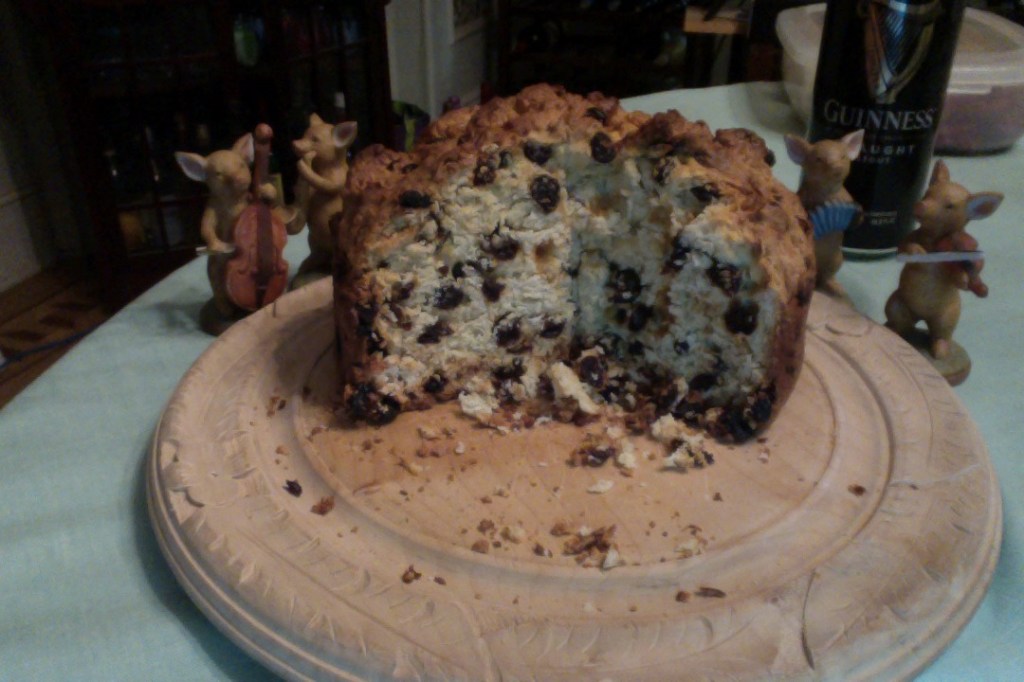
Then there is my mother’s traditional Paddy’s Day dinner—the succulent corned beef and cabbage, the foam-topped glasses of Guinness Stout, the mustard sauce with that extra bite, the warm, raisin-laden homemade soda bread with butter dripping from the edge, and for dessert, the pièces de résistance—the Irish coffee topped with hand-whipped cream and, of course, the frogs. Frogs, you may ask? Aren’t those French, or maybe Greek (“Brekekekex Koax Koax,” and all that)? No, the frogs I speak of are made up of a moist and airy vanilla cupcake topped with a tall mound of pink Swiss buttercream, silky and sweet, and covered all over in green hard icing. They were a St. Patrick’s Day invention of the old Jewish bakery on Yellowstone Boulevard, but alas, it closed long ago, so we had to learn to make them ourselves.
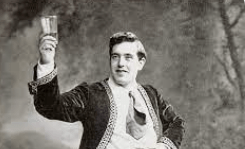
For all the culinary delights, the most essential St. Paddy’s Day feature for me is the soundtrack. Yes, the bagpipes are fun, and so are the Irish Rovers, but the sound this honorary Irishman’s soul longs for on St. Patrick’s Day is the inimitable, ineffable, indelible voice of John McCormack. Many are the men who have styled themselves Irish tenors over the years, but in my book there is really only one.
Born in Athlone, Ireland, in 1884, McCormack won a song contest at age twenty-one and went to Italy to pursue vocal studies. He made his professional debut in Savona and his American debut a few years later at the Manhattan Opera House, as Alfredo to Luisa Tetrazzini’s Violetta. He sang at the Met, but not often; his natural habitat was the concert hall, where his connection with the public was direct and immediate.
McCormack was breathtaking in operatic repertoire, particularly Mozart (try his version of Don Ottavio’s “Il mio tesoro”), and in his famous duet collaborations with violinist Fritz Kreisler in repertoire ranging from Schubert to Offenbach to Rachmaninoff. But he shines brightest in the songs of his native Ireland, traditional melodies referred to by Max de Schauensee, in the liner notes of my favorite McCormack album, as “ditties as blue and shining as a patch of Erin’s sky.” McCormack’s art married the impeccable technique of a virtuoso bel cantist with the story-telling gift of an Irish balladeer and the soul of a poet. His singing spoke directly to the listener’s heart. On John McCormack Sings Irish Songs, his timbre is warm as sunshine, sweet as honey and clear as a bell; his breath control is astounding; his high notes float as easily as the wings of the sparrow he sings about in “The Auld County Down”; his diminuendos suspend time and leave you forgetting to breathe.
Most important of all is the sense of complete connection with the sentiment each song is conveying and the audience he is singing to. McCormack never forces anything: there is nary a false note—literal or figurative—in his singing. The way he spins a line or bends a phrase can bring a smile to your lips or rend your heart. McCormack’s gift was divine, but the emotions he appealed to were purely human— and that’s no blarney.
 Louise T. Guinther
Leave a comment