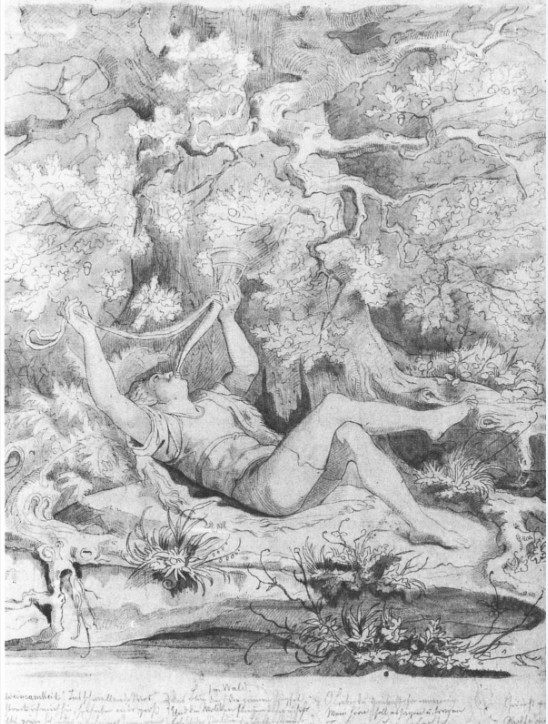
Grief is a peculiar thing. One expects it to be aggressive, hounding its victim like Aeschylus’s Furies. Instead, it’s elusive, almost shy, coming on little cat feet when one least expects it, then creeping away, only to come again. On television and in the movies, dramatic mourners howl and wail and confront their grief in a sort of instant-gratification rage, letting it all out in mini mad scenes that are the stuff of Oscar nominations. In real life, though, sometimes one sits and waits in vain for the all-encompassing misery to hit. There are moments of weeping, but they pass surprisingly quickly. My mind knows that my mother is gone, but my hopeful heart doesn’t comprehend the permanence of her departure. She seems to be here somewhere, maybe in the next room, maybe just over my left shoulder in a blind spot where I can’t quite catch sight of her, no matter which way I turn.
I keep waiting for the reality to hit, but maybe grief is really not the violent type at all. Maybe it just keeps gently nudging and poking until eventually it makes its full and lasting impression. Or maybe the abyss is right around the corner, and I’m in for a freefall. The uncertainty is disconcerting, and I find myself sometimes reading sad poetry by Mom’s favorite bards or watching maudlin movies about people who have lost loved ones, in a conscious effort to provoke my own mini-mad scene, just to get it over with. My mother might not have approved: she was not in favor of what she called “wallowing” in one’s misery.
Now and then a good wallow seems not only forgivable but essential. One of my more satisfying ways of wallowing is through music. I’m not sure why a beautiful melody—even a soft, slow, sad-sounding one—should be such a tremendous source of comfort, but it is, at least for me. Though it may make me weep buckets to listen to a soaring voice singing of endings, partings and separation, it’s always a good kind of weeping, the kind of tears that refresh and restore and wash away the earthly fog of selfish regrets to reveal the heavenly truth of redemption and life everlasting.
My “mourning playlist” has included a great variety of things, some purely nostalgic, because they were my mother’s favorites—Hoagy Carmichael, Glenn Miller, Herb Alpert, the Ink Spots—some my own largely classical notion of “comfort music.” I will share just a few of them with you here, partly for the sake of anyone else who may be grieving and in search of a not-too-gut-wrenching way to wallow, and partly for the joy of sharing beauty.
First up, Mom’s favorite bass-baritone, George London, singing Wolfram’s Hymn to the Evening Star, from Tannhäuser. This is one of those texts that make you think Wagner couldn’t have been such a bad guy after all, if he had such tender and transcendent words and characters in him.
Wie Todesahnung Dämmrung deckt die Lande,
umhüllt das Tal mit schwärzlichem Gewande;
der Seele, die nach jenen Höhn verlangt,
vor ihrem Flug durch Nacht und Grausen bangt.
Da scheinest du, o lieblichster der Sterne,
dein sanftes Licht entsendest du der Ferne;
die nächt’ge Dämmrung teilt dein lieber Strahl,
und freundlich zeigst du den Weg aus dem Tal.
O du, mein holder Abendstern,
wohl grüsst’ ich immer dich so gern:
vom Herzen, das sie nie verriet,
grüsse sie, wenn sie vorbei dir zieht,
wenn sie entschwebt dem Tal der Erden,
ein sel’ger Engel dort zu werden!
Like a harbinger of death, twilight decks the land,
Draping the valley in her dark mantle;
The soul that longs for those heights
Trembles before its flight through dread and night.
Then you appear, O loveliest of stars;
Your soft light you send from afar;
You cleave the darkling twilight with your loving ray,
And as a friend you show the path out of the valley.
O you, my fairest evening star,
Gladly have I always greeted you:
From a heart that has never betrayed her,
Greet her soul when it passes you,
When she soars above this mortal vale
To become a blessed angel there!
Speaking of angels, another heavenly treat Mom brought to our attention was Mahler’s Fourth Symphony, particularly the last movement, containing a child’s vision of paradise — “Das himmlische Leben,” from Des Knaben Wunderhorn, Germany’s answer to Mother Goose. Reri Grist was a particular favorite of Mom’s from her days working at City Center in the 1950s, when Grist was there singing Cindy Lou/Micaela in Carmen Jones. Grist’s pure, luminous sound is as childlike as it is angelic, making it ideal for Mahler’s ethereal setting. I sincerely hope Mom is enjoying all the otherworldly amenities, especially the “good asparagus,” one of her favorite vegetables.
Wir genießen die himmlischen Freuden, D’rum tun wir das Irdische meiden. Kein weltlich’ Getümmel
Hört man nicht im Himmel!
Lebt alles in sanftester Ruh’.
Wir führen ein englisches Leben, Sind dennoch ganz lustig daneben; Wir tanzen und springen,
Wir hüpfen und singen,
Sankt Peter im Himmel sieht zu.
Johannes das Lämmlein auslasset, Der Metzger Herodes d’rauf passet. Wir führen ein geduldig’s, Unschuldig’s, geduldig’s,
Ein liebliches Lämmlein zu Tod.
Sankt Lucas den Ochsen tät schlachten Ohn’ einig’s Bedenken und Achten. Der Wein kost’ kein Heller
Im himmlischen Keller;
Die Englein, die backen das Brot.
Gut’ Kräuter von allerhand Arten, Die wachsen im himmlischen Garten, Gut’ Spargel, Fisolen
Und was wir nur wollen.
Ganze Schüsseln voll sind uns bereit!Gut’ Äpfel, gut’ Birn’ und gut’ Trauben; Die Gärtner, die alles erlauben.
Willst Rehbock, willst Hasen,
Auf offener Straßen
Sie laufen herbei!
Sollt’ ein Fasttag etwa kommen,
Alle Fische gleich mit Freuden angeschwommen! Dort läuft schon Sankt Peter
Mit Netz und mit Köder
Zum himmlischen Weiher hinein.[note 1]
Sankt Martha die Köchin muß sein.
Kein’ Musik ist ja nicht auf Erden, Die unsrer verglichen kann werden.
Elftausend Jungfrauen
Zu tanzen sich trauen.
Sankt Ursula selbst dazu lacht. Kein’ Musik ist ja nicht auf Erden, Die unsrer verglichen kann werden. Cäcilia mit ihren Verwandten
Sind treffliche Hofmusikanten!
Die englischen Stimmen
Ermuntern die Sinnen,
Daß alles für Freuden erwacht.
We enjoy heavenly pleasures
and have no need of earthly ones. No worldly tumult
is to be heard in heaven.
All live in the softest repose.
We lead angelic lives,
yet have a merry time of it besides. We dance and we spring,
We skip and we sing.
Saint Peter in heaven looks on.
John lets the lambkin out,
and Herod the Butcher lies in wait for it. We lead a patient,
an innocent, patient,
dear little lamb to its death.
Saint Luke slaughters the ox
without any thought or concern.
Wine doesn’t cost a penny
in the heavenly cellars;
The angels bake the bread.
Good greens of every sort
grow in the heavenly vegetable patch, good asparagus, string beans,
and whatever we want.
Whole dishfuls are set for us! Good apples, good pears and good grapes, and gardeners who allow everything!
If you want roebuck or hare,
on the public streets
they come running right up.
Should a fast day come along,
all the fishes at once come swimming with joy. There goes Saint Peter running
with his net and his bait
to the heavenly pond.
Saint Martha must be the cook.
There is just no music on earth that can compare to ours.
Even the eleven thousand virgins venture to dance,
and Saint Ursula herself has to laugh. There is just no music on earth
that can compare to ours.
Cecilia and all her relations
make excellent court musicians. The angelic voices
gladden our senses,
so that all awaken for joy.
Mom was also a big fan of Richard Strauss, whose soaring melodic perorations lift one out of oneself to some transcendent spiritual place, especially when sung by a first-class soprano voice such as Lucia Popp’s. The Vier Letzte Lieder (Four Last Songs) express a gently yearning perspective on the end of life that I like to hope was in my mother’s mind and heart in her last days. I wish her all the scents and birdsongs of the first poem and all the quiet sunset repose of the last.
Frühling/Spring (Hermann Hesse)
In dämmrigen Grüften
Träumte ich lang
Von deinem Bäumen und blauen Lüften
Von deinem Duft un Vogelsang.
Nun liegst du erschlossen
In Gleiss und Zier,
Von Licht übergossen,
Wie ein Wunder vor mir.
Du kennst mich wieder,:
Du lockest mich zart,
Es zittert durch all meine Glieder
Deine selige Gegenwart.
In dusky crypts
I have long dreamt
of your trees and blue vaults,
Of your scents and birdsongs.
Now you lie revealed
In glistening splendor,
flushed with light,
like a wonder before me.
You know me again,
You beckon me tenderly;
You set all my limbs aquiver
with your blissful presence.
September
Der Garten trauert,
Kühl sinkt in die Blumen der Regen.
Der Sommer schauert
Still seinem Ende entgegen.
Golden tropft Blatt um Blatt
Nieder vom hohen Akazienbaum.
Sommer lächelt erstaunt und matt
In den sterbenden Gartentraum.
Lange noch bei den Rosen
Bleibt er stehen, sehnt sich nach Ruh.
Langsam tut er die großen
Müdgewordnen Augen zu.
The garden mourns,
Coolly sinks the rain into the flowers.
Summer shudders
against its approaching end.
Golden leaf drops upon leaf
down from the lofty acacia.
Summer smiles, astonished and weak,
in the dying garden dream.
A while longer by the roses
it remains standing, yearning for rest.
Slowly it closes its large
ever more weary eyes.
Beim Schlafengehen (Hermann Hesse)
Nun der Tag mich müd gemacht,
Soll mein sehnliches Verlangen
Freundlich die gestirnte Nacht
Wie ein müdes Kind empfangen.
Hände, laßt von allem Tun,
Stirn vergiß du alles Denken,
Alle meine Sinne nun
Wollen sich in Schlummer senken.
Und die Seele unbewacht
Will in freien Flügen schweben,
Um im Zauberkreis der Nacht
Tief und tausendfach zu leben.
Now that the day has tired me out,
my dearest longings shall
be received in friendly fashion by the starry night
like a weary child.
Hands, leave all your doing,
head, forget all your thinking;
all my senses now
will sink into slumber.
And my soul, unobserved,
will float freely on untrammeled wings
in the enchanted circle of the night,
to live deeply and a thousandfold.
Im Abendrot (In the Glow of Evening)
Wir sind durch Not und Freude
Gegangen Hand in Hand,
Vom Wandern ruhn wir beide
Nun überm stillen Land.
Rings sich die Thäler neigen,
Es dunkelt schon die Luft,
Zwei Lerchen nur noch steigen
Nachträumend in den Duft.
Tritt her, und laß sie schwirren,
Bald ist es Schlafenszeit;
Daß wir uns nicht verirren
In dieser Einsamkeit.
O weiter stiller Friede!
So tief im Abendrot,
Wie sind wir wandermüde —
Ist das etwa der Tod?
We have, through adversity and joy
journeyed hand in hand;
From our wanderings, rest we now
Upon this quiet land.
Around us slope the valleys,
The light already fades;
Only two larks still rise aloft,
following a dream, into the scented air.
Come here and let them flutter by,
Soon comes the time to sleep;
It wouldn’t do to lose our way
In this solitude.
O wide, quiet peace,
So deep in the flow of evening …
How wander-weary we are —
Is this by chance Death?

 Louise T. Guinther
Leave a comment