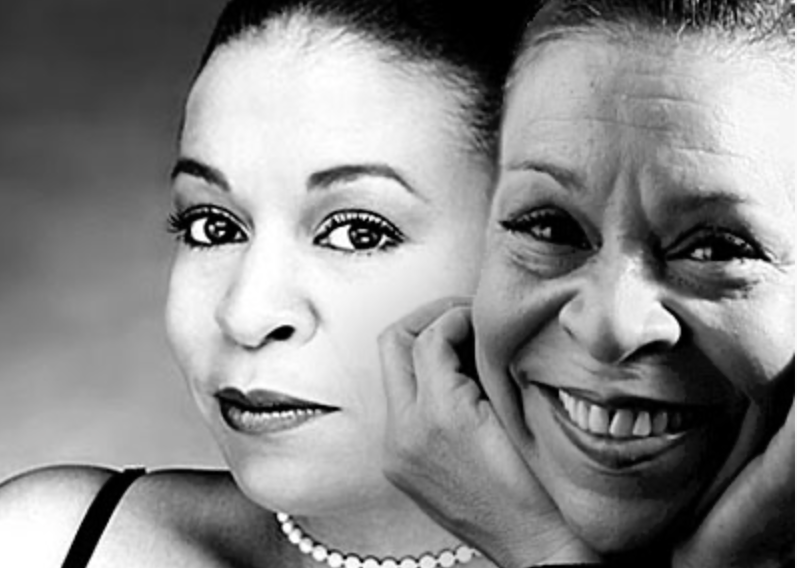
With Black History Month coming to a close, I wouldn’t want to miss my last chance to contribute to a celebration the Trump Administration would no doubt like to eradicate. Instead of another round-up of great singers, I’m going to concentrate this year on just one Black operatic artist, Roberta Alexander, whose birthday happens to be this coming Monday. I’ve admired Alexander ever since I first saw her, as the Countess in Le Nozze di Figaro at the Metropolitan Opera back in my college years. (And speaking of DEI, a term that hadn’t even been invented at that time, that Met performance also happened to include a hat trick of other great Black opera singers — Barbara Hendricks, as Susanna; Hilda Harris, as Cherubino; and Harolyn Blackwell, as Barbarina.)
Born in Lynchburg and raised in Wilberforce, Ohio, Alexander is the product of a musical family: her father was a choral conductor at Wilberforce University, a historically Black university, and her mother was a soprano, pianist and voice teacher. Roberta grew up immersed in classical music. Both her parents studied with Undine Moore Smith, known as the doyenne of Black women composers, whom Alexander knew as “Auntie Undine.” Here’s Alexander singing Smith’s “Is There Anybody Here That Loves My Jesus?”
Alexander claims to have known all her mother’s arias and remembers, “I was only allowed to go to my mom’s concerts if I didn’t sing along.” She was, however, allowed to sing “whatever voice was needed” in the Wilberforce Choir when it was leading two Sunday services a week at the university. Classical music, she says, “was in the blood.” Piano lessons, flute lessons and dance lessons occupied her childhood, though it wasn’t until she attended a summer music program for Black kids at Virginia State that she began to study voice formally. But from the age of seven, she knew that singing and acting in opera was what she wanted to do.
Alexander attended Virginia State for a year. She laughingly told an interviewer that her parents removed her after a freshman year during which she “acted out” in defiance of the school’s strict 8:00 curfew, adding unrepentantly that she “had a great time!” Her schooling was completed at Central State University, which happened to be across the street from her parents’ house, where they could keep an eye on the budding but rebellious artist.
Central State afforded the young Alexander an opportunity she now files “under the category of things you do when you don’t know any better.” Leontyne Price, also an alum of Central State, was awarded an honorary doctorate while Alexander was studying there. Selected to sing at the ceremony, the eighteen-year-old Alexander chose “Ritorna vincitor,” Price’s signature aria. “She was very gracious,” says Alexander. “She didn’t say, ‘Girl, go sit down.’” The students were given the opportunity to usher at Price’s concert in Dayton, and Alexander recalls, “It was one of things where you just thought either you’re never going to open your mouth and try to sing again, or you’re going to say, ‘I’m going to aspire to that.’”
Fortunately, Alexander chose the latter. She began her professional career in Europe joining the opera studio at Dutch National Opera for a three-year contract singing mostly minor roles, then made the rounds of Europe’s regional houses. In 1980, she returned to the U.S. for her American debut as Pamina in Die Zauberflöte at Houston Grand Opera, bowed at San Francisco Opera in Conrad Susa’s Transformations, then apprenticed at Santa Fe Opera before arriving at the Met, as Zerlina in Don Giovanni,in 1983.
Despite her early stab at Aida in front of Leontyne Price, Alexander wisely decided to follow what she refers to as “the Mozart pathway,” which served her brilliantly. Though she felt some initial pangs at giving up the dream of singing dramatic Verdi and Puccini roles, she found her niche as one of the most luminous and elegant light-lyric sopranos of her time. Her singing is as smooth and rich as velvet, as shiny as satin, as light and airy as organza.
Most special is the way Alexander uses the music to build a portrait of character and emotion. Two excerpts from Idomeneo demonstrate the extreme variety of emotions of the volatile Elettra, who veers from sorrow to shame to out-and-out fury. Alexander’s use of dynamics and the way she punctuates a phrase and shapes a recitative, as well as the myriad of colors she can conjure in her timbre, are always matched beautifully to what the orchestra is doing and what the audience should be feeling along with the character.
This applies equally to the more internal realm of art song, in which Alexander excelled. This rendition of Strauss’s “Zueignung” (text by Hermann von Gill) exudes tenderness, calm and benediction.
Zueignung (Dedication)
Ja, du weißt es, theure Seele, Yes, you know it, dearest Soul,
Daß ich fern von dir mich quäle, That far from you, I tremble,
Liebe macht die Herzen krank, Love makes the heart sick,
Habe Dank. Have thanks.
[Hielt ich nicht], der Freiheit Zecher, Once I, drinking to Freedom,
Hoch den Amethisten-Becher Held high the amethyst beaker
Und du segnetest den Trank, And you blessed the drink.
Habe Dank. Have thanks.
Und beschworst darin die Bösen, And you cast out the evils in it,
Bis ich, was ich nie gewesen, Until I, who had never been so before,
Heilig, heilig an’s Herz dir sank, Blessed, blessed, sank upon your heart
Habe Dank. Have thanks.
One reason for Alexander’s expressive effectiveness is her care for the words. I’ve included the texts so you can get an idea of how carefully she inflects and enunciates, but since she’s an all-American girl, perhaps the best way to illustrate this gift is in the language native to most of my readers. So we’ll finish up with a classic from George Gershwin’s Porgy and Bess, text by Ira Gershwin and Dubose Heyward (of Country Bunny fame — and if you don’t know what this means, please ask me!), andSamuel Barber’s Sure on this Shining Night, setting a text by the Pulitzer Prize-winning American author and poet James Agee. Alexander uses the poets’ lyrics and the composers’ music to wrap us in a blanket of warm, gentle breezes and rapturous contentment — something we all need more of in these crazy times.
Sure on this shining night
Of starmade shadows round,
Kindness must watch for me
This side the ground.
The late year lies down the north.
All is healed, all is health.
High summer holds the earth.
Hearts all whole.
Sure on this shining night
I weep for wonder
Wandering far alone
Of shadows on the stars.
Okay, I can’t resist an encore — a wonderful song from one of the greatest Broadway musicals of all time. Perhaps when she recorded this, Alexander was thinking back to her participation in a production of South Pacific in that high-school era summer program she attended.
 Louise T. Guinther
Leave a comment